
As described below, participated in an online program, CME/CE activity, Nationally Approved CME/CE Medical Marijuana (sic) Course V2. Rated the course highly. Wanted to be positive, as there is minimal cannabis research in our nation.
Expressed concern about the title, “Medical Marijuana,” and wanted to discuss other course limitations. Developer Meredith Fisher-Corn, MD, and The Answer Page frustrated my attempts to connect with Fisher-Corn. There is an arrogance in the medical industry in general, as I’ve sought to address this important medical issue for years. The Profession simply is not welcoming to outsiders.
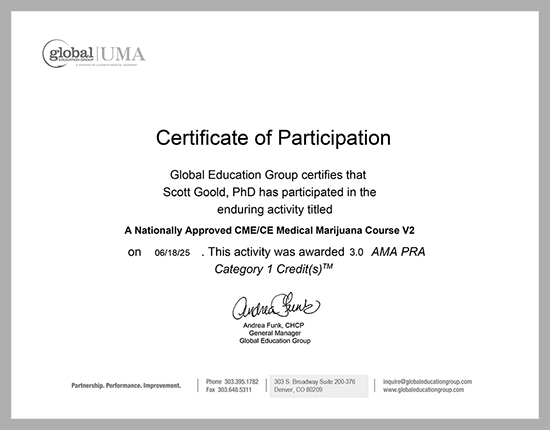
First, what is Medical Marijuana? I claim there is no such thing. Why not say “weed,” “pot,” “ganja” or “pakalolo,” as common street slang in the islands. Authors mislead the target audience.
The educational design of this activity addresses the needs of physicians, dentists, nurse practitioners, pharmacists, and psychologists involved and interested in the use of cannabinoids. This activity is designed for learners of any level of skill and knowledge. No prior experience is required to attend this activity.
Cannabis, not “marijuana” or “marihuana,” is a genus of flowering plants belonging to the family Cannabaceae, has been cultivated for thousands of years and used for various purposes. (Hazekamp 2012) Within the genus are various related plants, and these related plants have the names C. Sativa, C. indica, C. ruderalis, and hemp. (Hazekamp 2012, Pollio) Other than differences in appearance, cannabis varieties differ by their specific profile of components (phytocannabinoids and terpenes). (Hazekamp 2012).
For purpose of this article, cannabis is THC-infused, and not to be confused with CBD or low-THC hemp (less than 0.3%).
Around 1900, two companies in particular, Parke Davis & Company, and S.B. Penick & Company (now Pfizer and Siegfried Ltd) distributed cannabis sativa. Various actions to regulate cannabis, such as poison control acts, occurred over the next two decades. Harry Anslinger, director of federal Bureau of Narcotics, is credited with relabeling cannabis as “marijuana” or “marihuana.”
This distinction is important today, because Anslinger and supporters sought to capitalize on negative social tensions related to the influx of Mexicans and Blacks to the U.S. Current president has demonized illegal immigrants similarly.
Renaming cannabis and passage of initial laws were frequently motivated by racism. Socially and politically sensitive researchers therefore avoid use of “marijuana” or “marihuana” — and prefer the scientific label, cannabis.
The Medical Cannabis course was professional, but left out a major topic of concern: potential contraindications with cannabis and anesthesia. Contraindication concerns are crucial for patient safety, ensuring treatments are appropriate and do not cause harm. After multiple attempts to connect with Dr. Fisher-Corn proved unsuccessful, believe it best to publish this information.
In my political opinion, the greatest SIN of the United States of America was slavery. Required a terrible, tragic war killing over somewhere over 620,000 – 750,000, possibly 850,000 Americans, to atone for our nation’s cruelty and immorality. Second greatest SIN has been the war on Americans over the use of cannabis.
Hawaiian Electric management terminated my employment due to their confusion over medical cannabis policy. Their cruelty and incompetence destroyed my career, shattered the proficiency of our small IT group, and left the company, employees and general public at risk.
For years, I have worked to increase employee protections from medical cannabis discrimination. Asian-dominated island political elites continue a negative policy space for patients and recreational users.
Anti-Cannabis American History
Although precise estimates are unavailable, research suggests over 16.5 million Americans have been arrested for using cannabis since Republican President Richard Nixon criminalized in 1970.
My criminal justice research during my PhD program at the University of New Mexico, “Who’s in New Mexico Prisons,” suggested 25% – 30% of inmates were incarcerated due to non-violent possession convictions: costing taxpayers a fortune around $50,000 per year per inmate for incarceration. The cost to victims and their families due to this war is incalculable.
Republican Governor Gary Johnson relied on my finding in 2000 when he became the first government in the nation to call for cannabis legalization. Democrats intensely opposed our effort — labeling us stoners and potheads. Democrats led the initiative to legalize cannabis in 2021, and New Mexico legalized April 1, 2022.
The 22-year delay cost New Mexico billions of dollars, millions in tax revenue, and fueled the extensive criminal and cartel network in the state that drives much of the violence today. According to USAFacts, in 2023, New Mexico’s violent crime rate was 749 offenses per 100,000 people — highest among all states.
In 2006, as a new hire by New Mexico’s Workers Compensation Administration, the agency teamed me with an angelic female coworker, Alicia. She was a single mother with two adorable children; incredibly talented, bright and competent. She was suffering stage IV cancer and considered terminal. She remained active at the agency, as she needed the income and healthcare insurance.
We accomplished much Monday, Tuesday and Wednesday mornings. Wednesday afternoon was chemo treatment. She was too sick to work Thursday, sometimes Friday. If she did work on Friday, it was clear to all of us that each effort was a huge struggle. Collectively we watched Alicia die before our eyes.
A number of colleagues advised Alicia to consider medicating with cannabis. Wasn’t legal in New Mexico. Alicia refused. She didn’t want her children, ages 7 and 9, to consider their mother to be a criminal. The cruelty of New Mexico and federal law brought tears to all our eyes and wrenched our hearts.
Due to my first hand experience with Alicia’s slow-rotting death, and previous criminal justice research, I became a leading and vocal advocate to legalize medical cannabis. We were successful the following year, passing the Lynn and Erin Compassionate Use Act.
Medical Cannabis Potential Contraindications
Worked closely with Dr. Steven Rosenberg M.D. in the initial years of the program. He was an anesthesiologist, who specialized in managing pain. He provided basic guidelines about cannabis and drug interactions (DDIs), as well as adverse drug events (ADEs) associated with the combination of cannabinoid-based medicines and other pharmaceutical preparations.
DDIs may occur pharmacodynamically and/or pharmacokinetically. In the former, one drug may impact the sensitivity or responsiveness an individual has to another drug. DDIs occur when one drug affects the absorption and/or distribution and elimination of another drug.
Pharmacokinetic interactions can influence the quantity of drug at the site of action, and thus affect the magnitude as well as the duration of the effect. An example of a pharmacokinetic DDI would be when one drug induces (or inhibits) drug-metabolizing enzymes, including cytochrome P450 enzymes. (Vasquez).
Some potential drug interactions with cannabis shown in Table 2

Research about potential medical cannabis contraindications is limited, as the U.S. federal government still maintains cannabis as a Schedule I substance. Regardless of one’s political position about cannabis, denying research about this drug in the 21st century is another inexcusable SIN of our nation.
In early 2009, as a big-data medical and economic analyst for Workers Compensation, I discovered a statistically significant explosion in prescription requests for opioid pain medications. I had not been aware of the growing opioid epidemic, and these results staggered me. I brought my finding to my supervisor, Bureau Chief Mark Llewellyn. He was unimpressed and told me not to continue my analysis.
Mark was what we label today as a MAGA RETARD [1]. Had to testify against my boss the following year for suppressing findings related to migrant workers in the state. His extreme right-wing views blocked government action and worked to deny services to migrant farm and ranch workers.
I skirted around the chief and presented my research directly to our more competent director. He authorized me to contact the state Department of Health. Began sharing data. Workers Compensation deals with injuries in the workplace. My finding uncovered the massive challenge that was developing in New Mexico and across the nation.
The DOH connected me with the University of New Mexico School of Medicine. They invited me to participate in Project ECHO, where I certified as an addiction specialist in their three-year program. Our focus was on opioids, narcotic pain analgesics, alcohol, benzodiazepines, methadone and buprenorphine, which was a new treatment option for opioid addiction. I was the only professional with medical cannabis experience, as the university medical program was restrained by federal law.
The Answer Page Medical Cannabis Resource
As a medical cannabis patient in Hawai’i, I received an invitation this month from the state DOH Medical Cannabis Registry Program to obtain additional CME training on cannabis from The Answer Page. Course was offered at $180, and DOH paid the cost for the first 200 applicants. Signed up immediately.
TheAnswerPage is a medical education resource that has been providing the highest quality accredited education to the healthcare community for over 25 years. Awarded in the US and internationally, TheAnswerPage is now a recognized leader for providing comprehensive education on the endocannabinoid system and medical cannabis, pain medicine and opioid prescribing practices. Accredited content provides Accreditation Council for Continuing Medical Education (ACCME –AMA PRA Category 1 Credits™), Accreditation Council for Pharmacy Education (ACPE), American Academy of Nurse Practitioners (AANP), American Nurses Credentialing Center (ANCC), and American General Dentistry (AGD) credits.
TheAnswerPage creates tailored medical cannabis educational programs for Departments of Public Health, state medical societies, hospitals and medical schools. TheAnswerPage is the only education company where the Founding Editor-in-Chief and Editor-in-Chief trained and served together with distinction at Harvard Medical School and their affiliated teaching hospitals, and have both been the recipients of numerous awards, including the “Medical Professional of the Year Award” presented by the Americans for Safe Access (ASA) and the “Special Award for Medical Cannabis Education” bestowed by the International Association of Cannabinoid Medicine (IACM).

Politically, I am bitterly opposed to the actions of the nation of Israeli, see Death to Israel. Jewish Americans are honorable people. The genocide committed by Israel in Gaza is unacceptable, and reminds me of NAZI Germany. It’s another SIN on our nation to support this violence and murder.
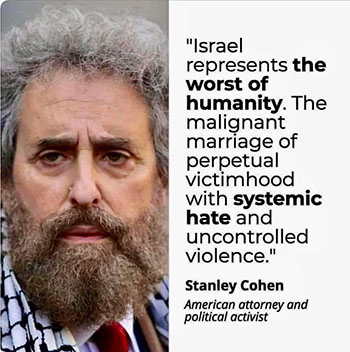
Israelis however are some of the brightest and best practitioners in medical accomplishment in the history of the world. They have a positive understanding of cannabis and lead in research. Politically, I’ve recommended relocating ALL the Jews in Israel to the USA — return the land to the Palestinians — end this nearly 80-years of war, violence and killing.
Americans love Jewish people and culture. Forcing these good people into the middle of Muslim nations — against the will of local residents — has been a violent disaster since 1948. Shall we talk about global SIN?
Cannabis and Anesthesia
Working with Dr. Steven Rosenberg M.D. around 2010, he was comfortable recommending medical cannabis treatment in advance of surgery that required anesthesia. His rule was simple: no food, drink or cannabis medication 10 hours prior to surgery.
This common sense protocol was complicated a few years ago by a Harvard study. Reached out to the authors. They did not respond. Suggested regular users of cannabis may require larger induction and maintenance doses of anesthesia intraoperatively. Their research claimed regular cannabis users (daily to weekly) need over three times as much propofol to achieve adequate sedation for endoscopies compared to non-users.
Other research contradicted the Harvard claims: usage of cannabis does not necessarily impact the success rate of anesthesia. In one study, 88% of nonusers and 61% of cannabis users were successfully anesthetized, with no statistically significant difference found between the two groups.
Another retrospective case-control study evaluating anesthesia risk in cannabis users undergoing esophagogastroduodenoscopy (EGD) found no statistically significant differences in propofol, fentanyl, or ketamine administration between the cannabis group and the control group. Furthermore, no adverse cardiac or respiratory events were reported within 30 days for either group.
These findings suggest cannabis users do not necessarily have an increased risk of anesthesia failure. However, it’s important to remember that all these conclusions are based on a limited sample size, and larger studies are needed to provide more definitive evidence.
Anecdotally, I have been a medical cannabis patient for seven (7) major surgeries beginning in 2010, with the most recent surgery in 2023. My treatment plan recommends 1-2 doses of THC-cannabis in the evening before bed. Analgesic effects reduce my severe chronic pain and sedation/relaxation properties help me sleep deeply and soundly. In all seven surgeries, I medicated the night before procedure and did not medicate the day of operation.
All my doctors reported my performance on the table was superior to average patient. All surgeries were successful, use of anesthesia similar or below the average patient, and surgical outcomes superior to the average patient.
As some doctors now recommend pre-operative protocol of 48-hour absence from cannabis medication, I warn the medical community. Specifically, Harvard scholars concluded, “users of cannabis may require larger induction and maintenance doses of anesthesia intraoperatively.”
If a habituated cannabis user, such as myself, stops medication, they will experience higher anxiety, higher heart rate and increased agitation. I hypothesize that the abrupt cessation of medication is the cause of the need for “larger induction and maintenance doses of anesthesia intraoperatively.”
My hypothesis is supported as research shows, “Post-surgery, regular cannabis users might be at risk of withdrawal symptoms. These can include irritability, sleep disturbances, restlessness, and cravings, all of which can impact the recovery process.” Stopping cannabis medication 48-hours prior to surgery risks triggering withdrawal in the user.
For this reason, I limit my time in the hospital post-surgery, as current policies do not allow cannabis use. I do not sleep well, and it’s hard to sleep in a hospital setting as it. Food does not taste good, and hospital food is known to be bland. Hospitals thankfully keep patients alive. To recover, I know it’s best to return home to my own bed, regular food, and rely on medical cannabis to manage my post-operative pain.
In conclusion, as stated by LotusBH, understanding the implications of cannabis use in relation to anesthesia and surgical recovery is key to ensuring your safety as a patient. Disclose cannabis use (legal or illicit) to your healthcare providers. Medical cannabis is an accepted treatment alternative for many BigPhRMA drugs. Educate your provider to help mitigate potential risks and complications, and allow for a smoother and safer surgical experience.
[1] Elon Musk, owner of social media platform “X,” popularized the term “retard” in community discussions.
Remember you heard it here first. Please leave your comments below and be sure to FOLLOW ClearHeath Life Strategies. We provide News of the News You Wish You Knew.
Ko’olau of Kaua’i. I am the Defiant One
“I Believe We Can”
 ClearHealthLife Strategies
One thought on “The Answer Page FRUSTRATES Answers about Medical Cannabis”