

Moana says: Please KOKUA Scott Goold Anti-Discrimination Act. HB 325 HD1 harms workers; doesn’t protect employers or make workplaces more safe. Current §329 laws do not fully protect medical cannabis patients in the workplace.
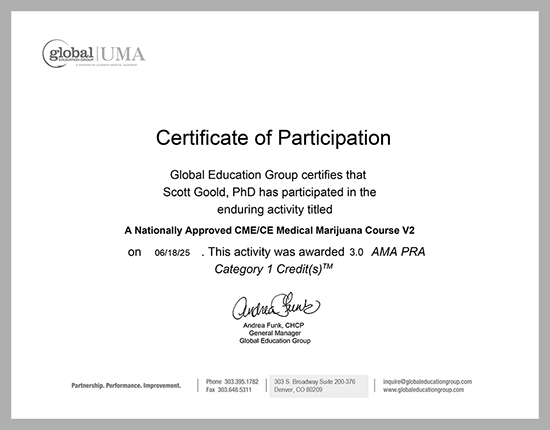
UPDATE 6.18.25: Goold Certifies in Medical Cannabis Excellence
Scott Goold enrolled in the on-demand Hawai’i Medical Cannabis CME/CE Course Bundle developed for the Hawai‘i Department of Health. Scott scored 100% of the five quizzes, and earned 3.0 additional AMA PRA CME/CE public health education credits. Scott urges ALL Hawai’i officials to update their knowledge of medical cannabis.
UPDATE 3.8.25: Governor Josh Green Claims to Support Reducing Trauma. FALSE
BEGGED Governor Josh Green to help me with trauma. Called me selfish:
You are not thinking straight. Your personal conflict has nothing to do with the rest of the state and you should get help. We are working on a $5B disaster and you think this about you and your marijuana conflict. Get real.
Hawai’i Governor Josh Green, March 5, 2024
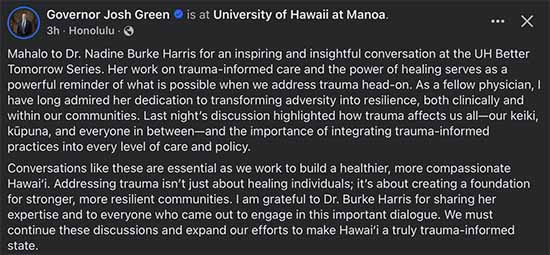
Was seeking help — from my governor. He could assist. Could help our family and others with the trauma we suffered. Josh says below, “Her work [Dr. Nadine Burke Harris] … serves as a powerful reminder of what is possible when we address trauma head-on.”
NBC News recently spoke with 20 federal employees across agencies, who had been thrown out of work — fired unjustly as Hawaiian Electric Co. fired me. “Spanning the country, these workers lost their jobs, watched co-workers lose them or endured what amounted to a Goliath joyously stomping on David. In interviews, federal workers — many of whom are veterans — told of overwhelming stress, personal crises, suicidal ideation, rapid weight loss, prolonged lack of sleep, panic attacks and visiting the emergency room after a mental breakdown.” I suffered such trauma. WOKEness in Hawai’i is similarly cruel.
Supported Josh; voted for Josh. Does not speak truthfully when he says he cares about reducing trauma. He does not address trauma head on. Maybe he cares about women — not White men. I’ve been trying to REDUCE trauma for over 30,000+ residents in Hawai’i. Josh ignores me.
NOTE: Wrote to Dr. Josh Green October 2019. Refuses to speak to me about this matter or help.
SEE: Increase Support for Your Bid for Governor
Mahalo to Dr. Nadine Burke Harris for an inspiring and insightful conversation at the UH Better Tomorrow Series. Her work on trauma-informed care and the power of healing serves as a powerful reminder of what is possible when we address trauma head-on. As a fellow physician, I have long admired her dedication to transforming adversity into resilience, both clinically and within our communities. Last night’s discussion highlighted how trauma affects us all—our keiki, kūpuna, and everyone in between—and the importance of integrating trauma-informed practices into every level of care and policy.
Conversations like these are essential as we work to build a healthier, more compassionate Hawai‘i. Addressing trauma isn’t just about healing individuals; it’s about creating a foundation for stronger, more resilient communities. I am grateful to Dr. Burke Harris for sharing her expertise and to everyone who came out to engage in this important dialogue. We must continue these discussions and expand our efforts to make Hawai‘i a truly trauma-informed state.
Hawai’i Governor Josh Green, February 8, 2025

Legislators REFUSE to Protect Patients
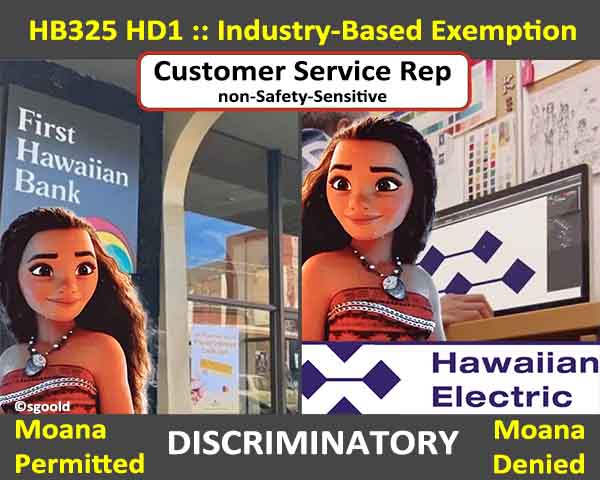
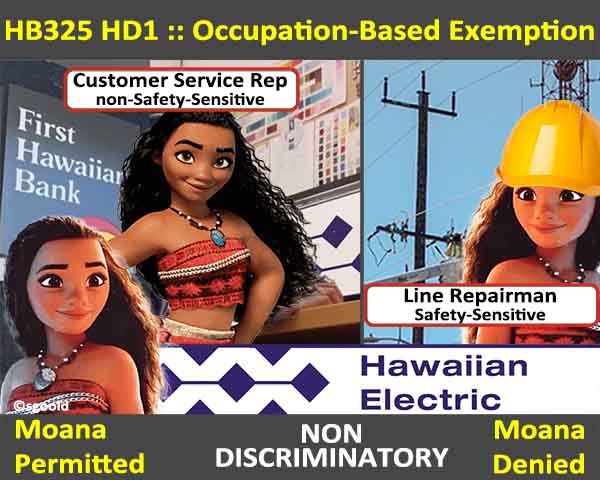
HB 325 HD1 allows discrimination based on the industry of the employee. Does not make “common sense.” Moana can work for First Hawaiian Bank for example as a Customer Service Rep; she would be fired by Hawaiian Electric serving in the same position, doing the same work. Hawai’i needs more aloha 🌈
There’s an old adage: You cannot escape two things in life — death & taxes. Not quite. None of us escape pain either. Young or old; Black, White, Brown or Asian; male or female … all suffer pain. And, women likely suffer pain more intensely than men.
Women report more-intense pain than men in virtually every disease category, say investigators who mined a huge collection of electronic medical records to establish the broad gender difference.
Stanford University School of Medicine
Managing pain therefore should concern all Americans. Scott Goold is a former pro ballplayer, served in the military, coached and trained athletes. Scott knows pain. As he’s aged, Scott suffered both acute and chronic pain, and many surgeries. Many doctors recommended opioid pain analgesics.
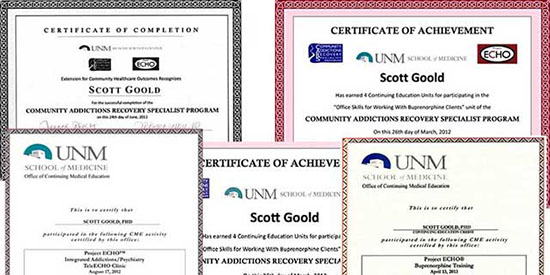
Concerned about addiction, Scott became an accredited Opioid Warrior to keep people from using opioid medications, as well as counseling those battling addiction to assist recovery. One scientifically-supported alternative is Medical Cannabis. Scott became a long-term patient.
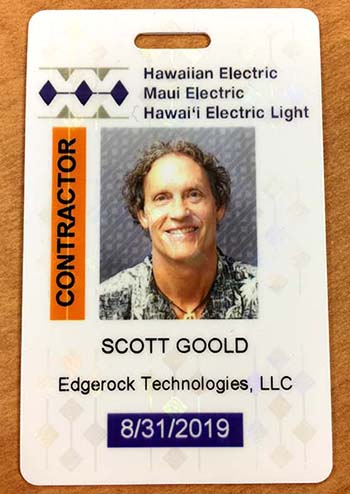
Scott Goold, career professional with an outstanding reputation, highly respected in his field, was FIRED however by Hawaiian Electric Co. (HECO) February 25, 2019, due to legal, prescribed Medical Cannabis use.
Officials and Media Discriminate
Honolulu CivilBeat refers to Medical Cannabis as “medical pot.” How childish and unprofessional. The media and officials aren’t helpful. Let’s in turn refer to them as retards. Not much aloha in Hawai’i.
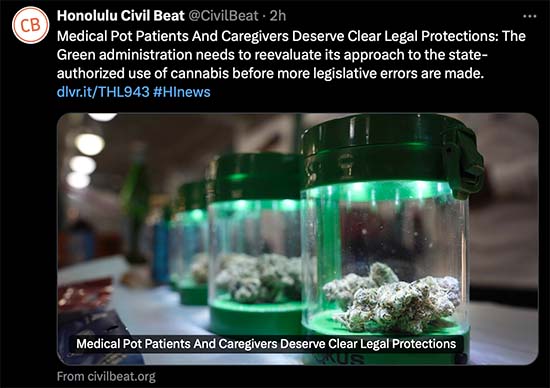
This history captures unremarkable corporate culture in Hawai’i where incompetence is rewarded and proficiency punished. Scott Goold was top-rated, ethical and an honest employee. HECO managerial action was anything but. The legislature must resolve this confusion.
Hi Scott,
I personally never saw any evidence of you being impaired. Quite the contrary in fact. I would say sharp, expedient, professional, technical, humble, the whole package really. But I did notice you had a limp, so I suspected you were in pain, but you never mentioned anything, and I never bothered to ask, our conversations were always about getting things done, and you delivered in times when we had to deliver and get things done.Cannabis is a complex issue, often misunderstood, has been known to relieve pain, and when used correctly does not impair.
HECO IT Department Coworker
Name withheld to prevent HECO retaliation
Scott Goold was serving The People of Hawai’i to keep them safe and electric lights on. His work helped prevent rogue nations, such as North Korea or Russia, from hacking HECO’s computer systems across three islands: O’ahu, Maui and Big Island. He managed databases that facilitated HECO ratepayers and customers.
HECO ratepayers funded Scott’s activity as a database analyst. The team trained for six months; costing well over a million dollars in aggregate to develop this IT Seal Team. Scott Goold was an integral part, an exceptional professional. Day 1 of their Super Bowl kickoff, HECO plucked Scott from the team. The investment was wasted, as well as Scott Goold’s career.
The legislature in Hawai’i legalized Medical Cannabis in 2000; updated discrimination protections in 2015. Scott Goold nevertheless lost employment, income and healthcare benefits; suffered professional and public humiliation.
His dismissal had nothing to due with workplace performance — confusion solely over Medical Cannabis policy. Some 30,000+ patients in the Aloha state are not treated with aloha. Hawaii’s legislature needs to act now. Moana and Scott Goold therefore suggest amending HRS §329 with HB 325 HD1 using Occupation-Based exemptions. Nobody is treated unfairly. Live aloha 🌈
PLEASE KOKUA ACTION ITEM
Numerous state representatives proposed Anti-Discriminatory Measures to the existing HRS §329 Medical Cannabis statute [visit].
Scott Goold PROVIDES Amendments to H.B. 325 H.D. 1
[HB 325 Amendment Proposal :: download].
Cruel Management in Hawai’i
Due to the traumatic and devastating termination, Scott devoted his energy to restoring his personal and professional reputation, as well as working to end discriminatory employment practices for Medical Cannabis patients in Hawai’i and across the U.S. No human being should be forced to choose between living with debilitating pain or relying on unsafe medication to be gainfully employed and respected.
Scott asked HECO management to join him developing a more refined Medical Cannabis policy. He pointed out that this open wound has festered for six years. It’s a small island and ancestral Hawaiians used a system of ho’oponopono to squash differences. Scott offered to cooperate laulima with company officials [download]. HECO did not respond.
Scott therefore pushes forward unilaterally hoping to bring needed change to the Aloha state. Scott also provides an extensive history related to S.B. 64, sponsored by state Senator Roz Baker in 2021
[SB 64 2021 Committee Testimony Packet :: download 8.6MB].
Ua Mau ke Ea o ka ʻĀina i ka Pono
The life of the land is perpetuated in righteousness
Prior to accepting the position with HECO, Scott had been elected union Vice President by his female colleagues. Scott played the role of TopCop with management and ended abusive practices. He earned coworkers equitable pay and humane working conditions. Scott was also fair to managers. Scott’s core philosophy is RESPECT … RESPECT for workers; RESPECT for management: One team working together for the mission of the organization. Productivity, morale and retention soared. Medical Cannabis policy must respect concerns of employers and needs of employees.
In Scott’s assessment, management is inexperienced in Hawai’i. There are excellent professionals. Scott believes they are the exception rather than the rule. Employees in general face intense competition. Managers demand perfection and control. The ghosts remain of living under kings in Hawai’i. Kings put those they didn’t like to death. Fear runs rampant in Hawai’i workplaces.
Management selection isn’t merit-based, but leans toward friends, family, political allies or select favorites. Managerial incompetence therefore is common, and HECO’s incompetent implementation of their internal Substance Abuse Policy (SAP) and state Medical Cannabis laws led to Scott’s wrongful termination. Management cruelty nearly killed him. The legislature must clarify the law.
HECO Management Deflects Blame
When his manager, Lori Yafuso, offered Scott the opportunity to apply for a newly-opened position, Scott checked with HR about the company’s Medical Cannabis policy. Supervisor Lori had rated Scott Goold a top performer — in sports terms, a MVP: “you have had the greatest influence in our success.”
YOU have been a great asset to our team and it is your personality and humble nature that makes all of us so comfortable working together. We have had contractors on the DBA team before, but never with the synergy and positive energy that you bring with you. I believe you have had the greatest influence in our success and glad that we selected the right contractor. You have definitely made your mark here at Hawaiian Electric and have set the bar very high for future contractors!
Thank you for being you…keep doing what you do…keep that good karma flowing!
Lori Yafuso
HECO IT Department Manager
Scott recalls HR rep Liz Dear told him he would be fine when he inquired on February 14, 2019 [source]. Dear disputed his claim. HECO instead claims Dear said, “I don’t believe it will be a problem and if there are any issues, someone will get back to you” [source].

Nobody got back to Scott. HECO therefore misled Scott to believe he was fine. HR director Shana Buco knew Scott had inquired and was confused. Buco however let Scott submit to the company drug test under false pretenses. Scott believes HECO, Dear and Buco entrapped him [source].

Per corporate policy, Scott Goold had a right to know HECO Substance Abuse Policy (SAP) [download] and that his legal, prescribed medication would be an issue. Scott could have declined to test. Could have asked to speak to senior management and request a waiver. Scott could have withdrawn his application. HECO and Shana Buco denied Scott access to company policy and misled him to believe there were no issues.
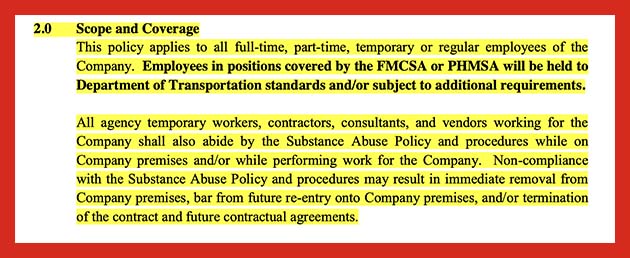
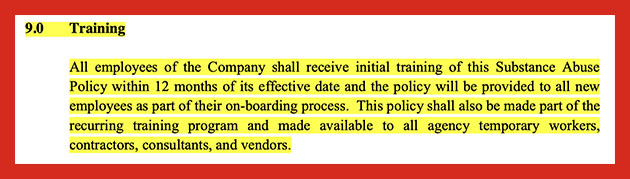
HECO claims Dear did not know SAP policy. HECO was required to inform Dear, as well as Scott. Policy applied to Scott Goold and Liz Dear equally. HECO failed to follow their own policy. Second, if Dear did not know the answer, Dear’s professional and competent response should have been, “I don’t know. Please contact Shana.”
Scott was seeking assurance. Scott would not have accepted Dear’s “belief” about policy. Scott is certain Liz Dear said he would be fine. HECO however never got back to Scott as Dear promised.
Scott Goold also believed that Liz Dear and Shana Buco were competent coworkers. Both had been professionally kind and courteous to him initially. Scott’s coworkers in the IT department were competent. Scott assumed all HECO staff were as well. Scott believed all were on the same team; working toward the same mission. Scott Goold made a mistake trusting Liz Dear and Shana Buco.
Respected to Rejected
On February 20, 2019, Scott recalls receiving a phone call from HECO IT Security Herman Lau. Scott says Lau congratulated him for being selected for the position and mentioned a work order to update Scott’s email and computer settings to permanent employee from contractor. Scott informed Supervisor Yafuso. The IT group held a small celebration for Scott, Friday, February 22nd. Scott was deeply respected. Scott in turn truly loved and admired his supervisor and coworkers. Short lived!
On Monday before lunch, Shana Buco called Scott and fired him. RESPECTED to REJECTED !!! Scott recalls Shana directed him not to reply to emails, respond to phone calls or forward any unfinished work to colleagues. Scott remembers Shana telling him that he presented a danger to coworkers, the company and general public. Shana ordered Scott to immediately exit HECO property. TERMINATED!
“Non-compliance with the Substance Abuse Policy and procedures may result in immediate removal from Company premises, bar from future re-entry onto Company premises, and/or termination of the contract and future contractual agreements.”
HECO Substance Abuse Policy
2.0 Scope and Coverage
Scott was a legal Medical Cannabis patient in the State of Hawai’i Department of Health program. The state legislature had created the policy framework in 2000 — nearly 20 years earlier. HECO now treated Scott Goold as a criminal; as an employee who had broken the law, stole from the company, or assaulted a coworker or supervisor.
On Friday afternoon, Scott Goold was a top HECO performer. Monday at noon, HECO didn’t want to hear his name. Scott had honorably, ethically and honestly applied for the position. In return, Scott Goold was embarrassed, humiliated and shamed. Supervisor Yafuso wasn’t interested in working with Scott further. To HECO, Scott Goold was dead.
Supervisor Yafuso had signed a six-month contract with Scott in December that would run through July 2019. HECO now fired Scott and demanded he exit immediately like a drug criminal — not a Medical Cannabis patient.
Shana’s cruel dismissal and demands rushed Scott. He left a $500 pair of Cole Haan shoes and suffered a panic attack. Scott collapsed just outside the building. At home, he contemplated suicide … that horror tempted Scott for months. HECO had shamed and humiliated a top-rated professional.
Men and Women Are Not Angels
Writing in the Federalist Papers, U.S. Founder James Madison penned:
If men were angels, no government would be necessary. If angels were to govern men, neither external nor internal controls on government would be necessary.
Federalist No. 51, February 8, 1788
The female managers at HECO likely were kind, considerate people, but certainly not angels toward Scott. They had failed to provide Scott Goold with the corporate Substance Abuse Policy (SAP). Scott had no knowledge that HECO prohibited Medical Cannabis. Scott’s gentle, kind supervisor Lori Yafuso failed to discuss medication policy with him PRIOR TO BEGINNING WORK, as required. Liz Dear and Shana Buco failed to honorably, fairly explain HECO cannabis policy to Scott.
HEI CEO & president Constance Hee Lau and team promised to treat all employees and the public fairly [page 21]; allowed a waiver of any policy as needed [page 24]; and claimed HEI and HECO pursued ‘imi pono — to strive for righteousness [page 1]. CEO Lau repeatedly characterized corporate culture as [download]:
With that great privilege comes great responsibility
In Scott’s experience with senior women at Hawaiian Electric, a high-percentage who are Asian, Scott found the ladies to be talented, bright and endearing. Scott viewed CEO Connie Lau with admiration. Why then did these women treat Scott so callously, incompetently and cruelly?
Scott believes HECO’s reaction would have been different had he been a woman battling breast cancer. What female would fire another woman in her time of need. Scott questions why generally compassionate professional women did not care equally about a male? Why the alarmist reaction and removal from employment? Scott Goold was an IT and software specialist; a non-safety-sensitive employee working in a back room far from customers or dangerous conditions. Isn’t that the purpose of HECO’s policy waiver clause?
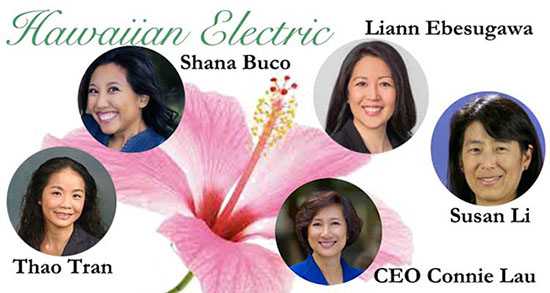
HECO refused to speak with Scott. Forced Scott to retain an attorney, which created an adversarial relationship. Supervisor Yafuso had praised Scott’s “personality and humble nature that makes all of us so comfortable working together.” She urged Scott to “keep that good karma flowing!” Where was HECO’s humble and compassionate nature?
HECO attorneys Susan Li and Thao Tran responded to Scott’s attorney. They extended an offer to allow Scott to return to service if he ended use of Medical Cannabis “cold turkey,” and produced a “clean” urine sample in 30 days. Scott’s attorney was able to enlarge the time period to 45-days, but Scott’s medical advisor warned that time might not be sufficient for a long-term medical patient.
Scott’s attorney therefore offered a blood sample. Denied. Scott’s attorney requested HECO allow Scott to taper off the powerful medication. Denied. HECO demanded Scott abstain “cold turkey.” Scott desperately wanted to return to work. He complied. Scott’s wife recalls that it “tore Scott up” physiologically, psychologically and emotionally. She reported that Scott was at times a raving madman and she didn’t even recognize her husband.
Thao Tran then withdrew the offer: times up! Tran claimed they were upset with Scott for claiming HECO fired him. Scott had a contract through July 2019. Shana Buco demanded he stop all work, exit the building February 25, 2019. Scott is union-trained. Seemed like a termination to him.
Hi Joe:
Thank you for your email and the proposed counteroffer. This is to inform you that we reject your counteroffer and, as you know, our offer is off the table as the deadline to respond to that offer has passed.As mentioned in my previous phone conversation with you, the Company is discovering on a regular basis Mr. Goold’s continued misrepresentation of, among others, our company’s relationship with him, which was never an employer-employee relationship. Mr. Goold was never an employee of the Company and was not terminated from our Company. The Company has concerns with such misrepresentations.
Thank you,
THAO T. TRAN
Thao
HECO Senior Associate General Counsel
May 3, 2019
Appears Thao Tran misled Scott and his attorney. Again, reviewing HECO Substance Use Policy (SAP):
“Non-compliance with the Substance Abuse Policy and procedures may result in immediate removal from Company premises, bar from future re-entry onto Company premises, and/or termination of the contract and future contractual agreements.”
HECO Substance Abuse Policy
2.0 Scope and Coverage
On February 25, 2019, HR director Shana Buco “immediately removed” Scott from Company premises, barred Scott from future re-entry onto Company premises, and/or terminated his contract with the Company, per HECO SAP 2.0. HECO fired Scott Goold. Thao Tran had no legal, moral or professional justification to have “concerns with such representations.” HECO had not provided Scott or his attorney with the SAP. They were unaware of Thao Tran’s misrepresentation.
As Men and Women are not angels, government intervention and oversight is therefore required.
Creating a Non-Discriminatory and Safe Workplace
Different from most illicit drugs, cannabinoids like THC and CBD are fat-soluble. The by-product from consuming cannabis is THC-COOH, which stores in the user’s fat cells. Doesn’t intoxicate or impair the user. THC-COOH however is a biological marker detected in urine screens. Urine screens therefore are discriminatory to legal cannabis users. Cocaine, meth, heroin and alcohol are water soluble for example. Urine tests are unreliable for these substances.
The urine screen also punishes the legal, long-term medical patient. Such an employee will indicate positive on the test. HECO then slandered Scott Goold claiming he violated their Substance Abuse Policy (SAP). Scott was not abusing any medication or drug. An illegal recreational user on the other hand may pass a screen, as they have not used consistently long enough to register a positive result.
Ending negotiations forced Scott to pursue legal action through the Hawai’i Civil Rights Commission. HCRC cheated Scott burying his complaint for 3.5 YEARS. HCRC commissioner chair was Liann Ebesugawa, also a lead attorney for HEI. Blatant conflict of interest. Scott had no alternative but to file a complaint in the circuit court. Hawaii’s judiciary cheated Scott by favoring the $4 billion corporation [source].
Currently, Hawai’i state representatives have proposed H.B. 325. The legislation is a repackaged bill proposed by state senator Roz Baker, S.B. 64, in 2021. S.B. 64 had serious flaws. H.B. 325 doesn’t resolve concerns. Scott provided a review [download].
Scott asked HECO management to join him developing a more refined Medical Cannabis policy. He pointed out that this open wound has festered for six years. It’s a small island and ancestral Hawaiians used a system of ho’oponopono to squash differences. Scott offered to cooperate laulima with company officials [download]. HECO did not respond. Scott therefore pushes forward unilaterally hoping to bring needed change to the Aloha state.
In Hawai’i, there is much energy devoted to creating “safe places” for employees, students and people in society. Hawaiian Electric promised fairness and to strive for righteousness. This example shows powerful companies do not practice what they preach.
The legislature created this program. Medical science supports the use of cannabis for treatment of pain and other ailments. The legislature however left patients without equitable protection. Patients are not safe under the program.
POLICY CONCERNS
- Employers, Employees and General Public want a SAFE workplace environment
- Employers are fearful of FEDERAL CONFLICT with state medical cannabis policy
- Employers are confused over which employees and industries should be covered
- Employers are uncertain what DEFINES “impaired” relative to cannabis
- Employers and Employees want a FAIR, RELIABLE and VALID testing system
[1] In Scott’s situation, HEI and HECO failed to ensure a safe environment. Scott worked for the company six months. HECO did not discuss their Substance Abuse Policy (SAP); did not provide policy; did not test for abusive behavior.
Nobody can claim HEI and HECO ensured the safety of employees, the company or general public. HEI and HECO had an elaborate SAP [download]. In Scott’s belief, the company didn’t educate him, Supervisor Lori Yafuso, Shana Buco or Liz Dear. HECO appears negligent in their implementation of policy.
[2] Hawai’i Medical Cannabis legislation is NOT IN CONFLICT with federal cannabis policy. The Rohrabacher–Farr amendment became law in December 2014, and specifically listed Hawai’i. States with well-implemented medical cannabis programs are exempt from federal interdiction.
Prohibits the Justice Department from spending funds to interfere with the implementation of state medical cannabis laws. None of the funds made available in this Act to the Department of Justice may be used, with respect to the States of Alabama, Alaska, Arizona, California, Colorado, Connecticut, Delaware, District of Columbia, Florida, Hawai’i, Illinois, Iowa, Kentucky, Maine, Maryland, Massachusetts, Michigan, Minnesota, Mississippi, Missouri, Montana, Nevada, New Hampshire, New Jersey, New Mexico, Oregon, Rhode Island, South Carolina, Tennessee, Utah, Vermont, Washington, and Wisconsin, to prevent such States from implementing their own State laws that authorize the use, distribution, possession, or cultivation of medical marijuana.
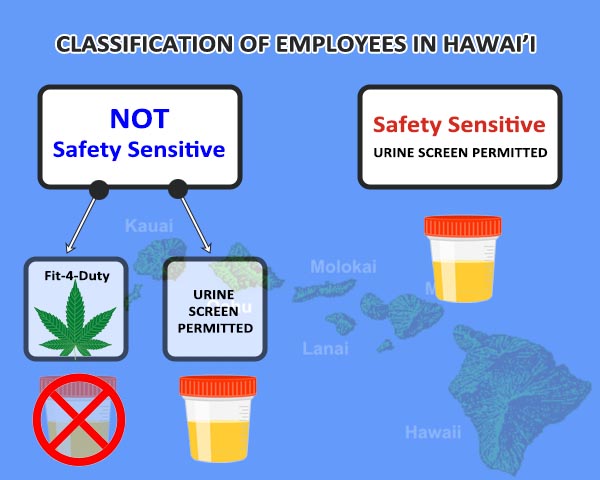
[3] U.S. Department of Transportation provides the KEY DESIGNATION for application of Medical Cannabis policy between safety-sensitive and non-safety-sensitive employees. Safety-sensitive employees may be urine drug screened, as well as non-safety-sensitive employees who are NOT legal Medical Cannabis patients. Recreational cannabis is not legal at the federal or Hawai’i state level.
Medical Cannabis patients should be evaluated on a fit-for-duty basis. Companies are not prohibited from using a fit-for-duty assessment, rather than urine screen, for ALL non-safety-sensitive employees.
Therefore, Medical Review Officers will not verify a drug test as negative based upon information that a physician recommended that the employee use “medical
DOT OFFICE OF DRUG AND ALCOHOL POLICY AND COMPLIANCE NOTICE
marijuana.” Please note that marijuana remains a drug listed in Schedule I of the Controlled Substances Act. It remains unacceptable for any safety‐sensitive employee subject to drug testing under the Department of Transportation’s drug testing regulations to use marijuana.
October 22, 2009 [source]
[4] Impairment and fitness-for-duty is 100% an employer and management determination. Cannabis isn’t the sole concern. Supervisors must be alert to determine if an employee has been drinking alcohol, for example. Lack of sleep can be impairing. Managers must know the “normal” behavior of their employees. Erratic, unusual or other concerning behavior must be addressed.
Some cannabis users function “professionally” after use. Police departments train officers how to observe and note impaired cannabis users. Whether legal or illegal consumption, management must train their staff. Experts trained to recognize an impaired employee in the workplace, rather than testing, is the best methodology to determine impairment, studies show.
[4a] Let’s address the “elephant in the room” regarding cannabis impairment. Arguably, Colt “Cannabis King” Brennan is considered the greatest University of Hawai’i quarterback, who successfully moved upward into the NFL. Colt admitted to using pakalolo “before every junior college, college and professional game.”
SEE: Can Cannabis Make You a Better Athlete?
SEE: Hawaii’s Greatest QB Cannabis King Colt Brennan and NFL $1,000,000 Challenge

“This is something that started in junior college. I’d go to my pregame meal, then I’d go to my (hotel) balcony and roll a blunt, and I’d smoke a fat blunt before the game, both in junior college, in NFL and in college. Then I would take a shower, brush my teeth, get clothed up and then get on the bus to the game and I would be in the zone right there.
Every time you come out of the tunnel it’s like someone puts a needle of adrenaline in your arm. You ain’t high no more, you are just ready to play the game. And so it would take away all that pre-game anxiety. All my team knew it. I don’t know if my coaches did or not but it was just something that I did.”
Colt Brennan
Interview with Wade Hampton Peery, The Flow Theory Podcast
Colt was a Heisman Trophy finalist. He led Hawai’i to an undefeated regular season in 2007, which brought national fame and recognition to the program. It’s absurd to continue the fear-mongering about cannabis “impairment.” Being a college or NFL quarterback requires the sharpest of skills, split-second decision making and top physical performance. Cannabis relaxed Colt. Reduced his pre-game jitters, eased his anxiety and helped him focus. Millions of Americans report similar success.
[5] Undisputedly, the urine screen is inappropriate for Medical Cannabis patients. Of course the employee will be expected to indicate positive. Does not suggest the employee is impaired. Supervisors must assess fitness-for-duty by observing Medical Cannabis employees. Same fitness-for-duty rule should apply for all employees.
Doesn’t matter why an employee appears to be impaired. If a supervisor believes the performance of an employee is substandard, the supervisor has the right and duty to remove the employee from service. Fit-for-duty should always be the supervisory standard.
For safety-sensitive employees and non-Medical Cannabis patients, companies may still prefer to rely on zero-tolerance protocols for cannabis and require urine screens. Some states have established a blood measure. Legal limit for THC in blood test to detect driving impairment is 5 nanograms per milliliter (5 ng/ml). Testing cannabis intoxication is measurable in blood for approximately 12 hours. Extracting blood in the workplace however is evasive and generally impractical. Both employers and employees seek a more precise methodology.
Please KOKUA the Scott Goold Medical Cannabis Anti-Discrimination Act.
No employee should ever again be forced to suffer the cruelty, loss of employment and destruction to professional and personal reputation as did Scott. Let Scott Goold be the last Medical Cannabis employee to be treated as a drug criminal in Hawai’i and across our nation.
PLEASE KOKUA ACTION ITEM
Numerous state representatives proposed Anti-Discriminatory Measures to the existing HRS §329 Medical Cannabis statute [visit].
Scott Goold PROVIDES Amendments to H.B. 325 H.D. 1
[HB 325 Amendment Proposal :: download].
Remember you heard it here first. Please leave your comments below and be sure to FOLLOW ClearHeath Life Strategies. We provide News of the News You Wish You Knew.
Ko’olau of Kaua’i. I am the Defiant One
“I Believe We Can”


8 thoughts on “Kokua Scott Goold Medical Cannabis Anti-Discrimination Act in Hawaii”