
Some Native Hawaiians (Kanaka), not all, are full of shit. And their political and social bullshit becomes deeper by the day. SFGate reports about a group of Kanaka residents on Molokai who want to return Hawaiian lands to Hawaiian hands. Yes, kind of racist. Imagine how these WOKE activists would complain if White folks demanded to return lands to White people. We would hear cries of white supremacy.
UPDATE 11.7.2025: Kamehameha Schools SELL Land under Royal Hawaiian Hotel
Ke Kula ‘o Kamehameha has made the strategic and difficult decision to sell the leased fee landholdings under the Royal Hawaiian Hotel for $510 million. The sale closed this week, on November 6, 2025, with the new fee-simple owner, Daisho Co., a Japan-based company. The property will continue to be held and operated under its current long-term ground lease to Kyo-ya Hotels & Resorts. On August 8, 2023, wildfire swept across the uncared land and incinerated at least 102+ residents of Lahaina, including keiki. KSBE had to sell the land to pay restitution to victims of their negligence.
UPDATE 9.25.25: Kamehameha Schools SELL 500 Acres of Ke Ali’i Pauahi Land
For nearly 20 years, American businessman Michael Dell leased Hualalai resort grounds from landowner Kamehameha Schools, a private trust founded by the will of Hawaiian Princess Bernice Pauahi Bishop (Ke Ali’i Pauahi) to improve education of Native Hawaiians.
Kamehameha Schools is the largest private landowner in the state, with nearly 370,000 acres, and its endowment has an estimated $4.7 billion in Hawai’i real estate. Dell purchased 491 acres of Ke Ali’i Pauahi land in late August for an estimated $400 million. Kamehameha Schools Board of Education (KSBE) FAILED to care for Ke Ali’i Pauahi donated lands. On August 8, 2023, wildfire swept across the uncared land and incinerated at least 102+ residents of Lahaina, including keiki. KSBE had to sell the land to pay restitution to victims of their negligence.
UPDATE 9.27.25: Molokai Residents Report Kanaka Hatred and Hostility
Due to my article, heard from Rob and Michelle. They purchased 6 acres of land about 19 years ago on the west side of Molokai with electric hookup and water connection. Built their home. Although they did their best to earn trust and friendship, they were never welcomed. The hatred and hostility never ceased. As described herein, these selfish and cruel Kanaka were NEVER kings, queens or monarchy. Kings, queens and monarchy controlled this land — not common Kanaka. And the kings, queens and monarchy deeded, traded, gifted and sold their lands to Americans and other non-Kanaka outsiders. This practice was the WILL and WAY of the Kingdom of Hawai’i. Common Kanaka today defy their kings and queens. They have no legal right or moral justification to treat other human beings in this manner. Remember, as you treat others, so shall you be treated. By denying aloha and righteousness to others, you will be denied aloha and righteousness.
Bullshit #1: Not Hawaiian lands. As I show, these lands transferred legally to Charles Reed Bishop in 1875, prior to the controversial constitution of 1887 or overthrow in 1893. Charles was an orphan and born in Glens Falls, New York. Having only an eight grade education, he sailed to Hawai’i in 1846 at the age of 24. In 1849, he became a legal citizen of the Kingdom of Hawai’i.
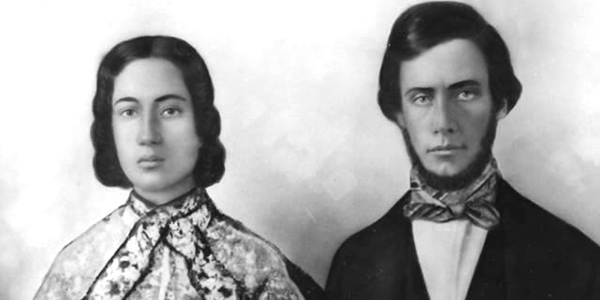
Charles was a man of considerable stature, who married Bernice Pauahi Pākī of the royal House of Kamehameha in 1850 over deep objections from Bernice’s family, “marry a White man and outsider?” She had fallen in love and love is blind to race and politics.
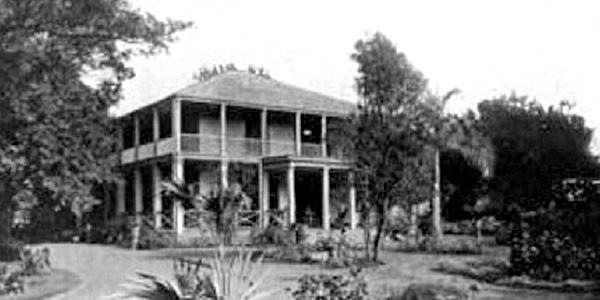
Together, they eventually lived in Hale’akala, historic pink coral house, on the Pākī family estate in Honolulu. Charles served numerous appointed positions in the kingdom. Bishop died at the age of 93 in San Francisco, California. [1]
Bullshit #2: Kanaka are NOT the best stewards for this land. Hawaiian high chief papa Abner Kuhoʻoheiheipahu Pākī built this amazing house himself around 1850 — translated as House of the Sun, as the house was constructed with pink coral rock. Abner was was an aliʻi from the island of Molokai. Imagine the damage to the reef to harvest and extract this much pink coral.
I’ve never seen pink coral, as it grows at great depths of 1,100 feet or more. Taking pink coral in Hawai’i today is strictly regulated to protect the resource, with permits required for harvesting. As shown herein, the royal family and friends poorly managed lands in the islands.
Bullshit #3: Hawaiian people are NOT so inherently tied to the place they were born. As will be discussed later, Bernice Pauahi Pākī demonstrated Kanaka are not wedded to maintaining tradition. It had been planned from her childhood that Pauahi, as a Hawaiian royal by birth, would marry her hānai (adopted) brother Prince Lot Kapuāiwa. The prince ruled as Kamehameha V, last of the dynasty, and offered Pauahi the throne on his deathbed in 1872. She refused.
This romantic liaison reminds me of Star Wars. Princess Leia held a deep down affection for the swashbuckling scoundrel, Hans Solo. Charles Reed Bishop left home at 24, on a dangerous and death-defying journey around the world, as he had his sights on relocating to Oregon. The waters around Cape Horn are particularly hazardous, owing to strong winds, large waves, strong currents and icebergs. Quite a man. Prince Lot, grandson of Kamehameha I, was also respected:
He was a wise sovereign; he had seen something of the world; he was educated & accomplished, & he tried hard to do well by his people, & succeeded. There was no trivial royal nonsense about him; He dressed plainly, poked about Honolulu, night or day, on his old horse, unattended; he was popular, greatly respected, and even beloved.
Mark Twain, Samuel Clemens [2]
To me, the king’s greatest contribution to the Kanaka lāhui as Kamehameha V was his rejection of legislation in 1865 to allow foreign merchants to sell alcohol directly to the Native Hawaiians. Alcoholism was one of the many causes of the already declining native population.
“I will never sign the death warrant of my people.”
Kamehameha V (Lota Kapuāiwa Kalanimakua Aliʻiōlani Kalanikupuapaʻīkalaninui)
In 1908, Charles M. Cooke, son of the early missionary teacher, Amos Starr Cooke, acquired 100% interest in the fee simple lands and subsequently established Molokai Ranch. These lands are American lands and were sold to Brierly Investments Limited (later BIL International Limited), who became the sole stockholder in 1987. [3]
Zhantell Lindo, a generational descendant of Molokai, wants the world to remember she claims they are victims, “It’s not that we have forgotten about all of the injustices and really harmful things that have happened, but rather that we rise above them.” Rise above? No, they now hope you will give them money. Kanaka don’t want to work in the traditional sense. Who does? We all would like to lounge on the beach all day and have someone bring us mango mai tais.
Due to the Kingdom of Hawai’i monarchy, the Kanaka population collapsed to 40,000 in 1893 from around 500,000 when British Captain James Cook arrived in 1778. USA annexation and protection saved the Kanaka, as there are over 450,000+ today.
Injustices? Kamehameha I, the great king, killed Kanaka to take all these lands. In 1848, Kamehameha III doled out the land in the Western sense as a pieces of property with the Māhele: 1/3rd went to him; 1/3rd to his friends; and 1/3rd to common Kanaka for land they cultivated and lived on. The Kuleana Act of 1850 gave the common makaʻāinana two years to make their land claims. King’s rule!
Some of this inherited land was later donated to build Kamehameha Schools, which currently faces major controversy for denying admission to non-Kanaka students. That policy is unjust. Follow the law, okay? And the lands of Molokai Ranch passed to Charles Reed Bishop.
Molokai Heritage Trust is no different from any other group. Everybody wants land. Russia has been bombarding Ukraine for over three years to acquire more land. Zionists in the Palestine Mandate have been murdering Palestinians for some 80 years to capture more land. All aggressors claim they are justified; and ALL are full of shit.

This group claims asking people for money is difficult because it’s “against our nature as people from Molokai,” but they have no money and no way to make money. The trust consulted with the community to create bylaws, values and a mission statement, and it is trying to determine how the organization will sustain itself to take care of the land once it is acquired so as not to repeat past harms by letting it sit in disrepair. Might be important to answer this question prior to seeking to acquire the land.
I’m from Idaho. Land is sacred to residents in this pristine wilderness. Idahoans however are hardy folks. They or their ancestors had to actually buy land — hard lands full of rocks and tree stumps, challenging climate, and tough conditions. Might take years to develop the land so they could produce crops, raise a few head of cattle and make subsistence income.
Different in Hawai’i. Soil is generally fertile. Easier to grow crops. Kanaka however didn’t buy land. They killed each other for land. Land was power, wealth and status. Conquering chiefs then doled out parcels of land to friends, and demanded peasants work the land or die. Members of the Molokai Heritage Trust likely didn’t purchase any land. Generally they live on land of parents or grandparents. They work gig jobs on the small island, as there’s little professional employment.
The issue writes Christine Hitt is Kanaka have been displaced from ancestral lands, and on the island of Molokai. Again, false claim. Christine is part-Native Hawaiian from the island of O’ahu, and a Kamehameha Schools and University of Hawaii graduate. Her claims are not accurate.
Kanaka were never displaced. More live in the islands today than in 1893 when the overthrow occurred. One-third of Molokai is owned by Hong Kong-headquartered billionaire investment firm Guoco Group. Molokai if you remember was infamous for the leper colony.
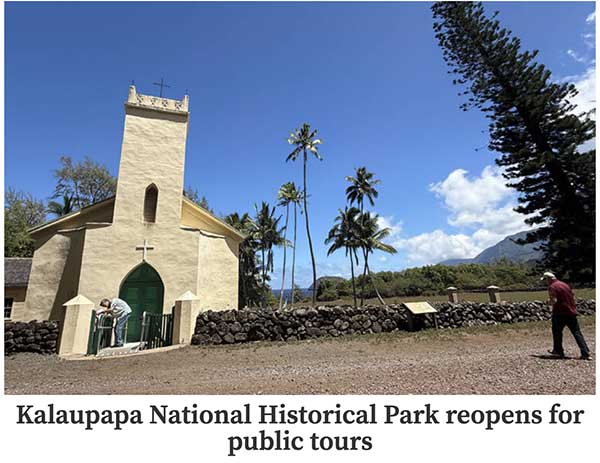
Kalaupapa National Historical Park, a remote peninsula on Molokaʻi, was established in 1866 by the Kingdom of Hawai’i to forcibly isolate people with Hansen’s disease (leprosy). Over 8,000 people were exiled to the area, which was surrounded by steep cliffs, creating a natural prison.
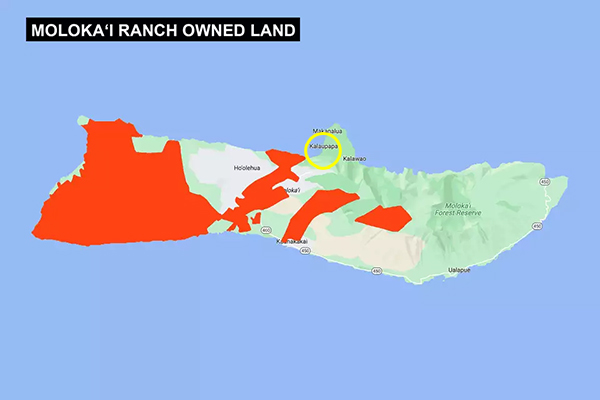
I write under the nom de guerre, Ko’olau of Kaua’i, to honor and remember Kaluaikoolau, ordered to Kalaupapa (yellow section above) in 1893, which he called the “grave where one was buried alive.” StarAd reports that the Hansen’s disease settlement, where history is still alive and few patients remain, reopens to public tours (9.21.25).
Bullshit #3: Displaced from ancestral lands. Kanaka are not like the indigenous tribes of North America. European expansion pushed them from their ancestral lands. Watch Chief of War on Apple TV and read my review on Becoming Tribal. Prior to the arrival of British Captain James Cook in 1778, there were five “chiefdoms” in the Hawaiian archipelago: Kaua’i/Ni’ihau, O’ahu, Maui, Big Island and Molokai, and each governed by a high ali’i nui.
The five ali’i nui dominated their land like feudal lords, killing and fighting to retain their land and power. Imagine a couple of homeless drifters wandering into these lands with their $49.95 Walmart tent, some plastic tarps for lean-tos, and making a homeless shelter. No can, brah! These brothers and sisters would be dumped in the weekly imu for celebratory snacks.
Beginning around 1782, Kamehameha, who brandished the war god icon from Big Island, began his violent military campaign to capture all the lands under his rule. He wanted to be more than a feudal lord — a king like those in England — the series Shōgun depicts the relationship.
As land equaled power, status and wealth, he wanted it all. His actions were driven by his ambitions for fame and fortune, not an idealist, utilitarian enterprise for the Kanaka people as a whole. Kanaka started the injustice against Kanaka in the islands. They are victims of their own system. Today, due to USA statehood, Kanaka are equal in stature with everyone else. This equality makes them unhappy. They claim they are entitled to privileged status.
The Inconvenient Truth is Kamehameha murdered Polynesian Kanaka to accomplish his mission. He’s the one who killed the most Kanaka en masse. He partnered with the British, ceding land and political power, in trade for British weapons of mass destruction — long guns and cannons, which he turned on Polynesian Kanaka brothers and sisters.
Thus, these lands were never ancestral lands of the Kanaka. They were the lands of Kamehameha. The Polynesian Kanaka arrived in Hawai’i from many different island chains in the Pacific. Their history is one of fighting over the land for centuries. Kamehameha squashed all opponents. He ruled the kingdom, along with Kamehameha II, Kamehameha III, Kamehameha IV and Kamehameha IV. Whoops! Then the Kamehameha bloodline died. Chaos reigned in the lands.
Bullshit #3: Zhantell Lindo, a generational descendant of Molokai, who is on the trust’s board of directors, described the community now as a “healed people.” Not quite accurate. Kanaka haven’t found their place in the modern world. They want to live on the land, as did their ancestors, but living on the land isn’t a living. Can’t afford the modern conveniences needed to survive. How does one buy a car selling flower lei to tourists?
Lindo claims they have “risen past all the hate and anger and injustices and formulated a new aloha-based approach that is powerful.” Claim isn’t true either. Hate and anger dominate the Kanaka lāhui. Ask Christopher Kunzelman. He remembers being asked, “You’s a haole, eh,” Hawaiian slur for a White person, just before two Kanaka, Kaulana Alo-Kaonoh and Levi Aki Jr., beat him nearly to death with a shovel. Then they told him no White people would ever live in Kahakuloa village — a Kanaka village. Imagine White people telling Black or Brown residents to stay out.
The anti-White attitude furthered by Kanaka in Hawai’i is similar to negative perceptions about White folk on mainland and many parts of the world. As Newton described in his 3rd Law of motion, every action has an equal and opposite reaction. The Charlie Kirk assassination is a turning point to many — including neo-nazi groups: “White man, the time has come to fight back. If you are not actively fighting back you are an active participant in our replacement.”
This is but ONE GROUP of Kanaka with their self-interest objective for themselves. They are no different than the ali’i nui of Molokai or other islands in the 1700s. If they assume guardianship over the land, they will fight other groups for control.
Fighting never ends with Kanaka, because they don’t actually buy the land. Ownership, flawed as it is, ends fighting. The buyer has legal title. Put land in a trust, then corruption overtakes the activities of those directing the trust. The history of Kamehameha Schools is one example.
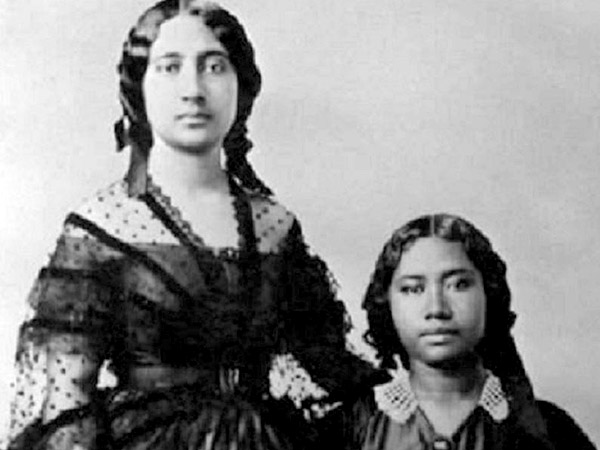
Princess Bernice Pauahi Pākī Bishop donated about 375,000 acres of land she inherited when she died for the schools: one for boys, one for girls. Her family were friends of the king and the king gave them land. She also donated the lands of Molokai Ranch, which this group now seeks.
Ninth. I give, devise and bequeath unto my husband, Charles R. Bishop, all of the various tracts and parcels of land situated upon the Island of Molokai, comprising the “Molokai Ranch”, and all of the live-stock and personal property thereon
By 1997 trustees of Kamehameha Schools were paid $800,000 to $900,000 annually. Now you understand why these Kanaka want to be the trustees of Molokai Heritage Trust. Always follow the money.
Kamehameha Schools failed to properly care for the land entrusted to them by the princess. On August 8, 2023, combined with negligent management by Hawaiian Electric Company (HECO), wildfire broke out and incinerated the historic town of Lahaina on Maui. My reporting details how over 102+ human beings, including keiki were killed, more than 2,200 homes and buildings destroyed, and in excess of 8,000+ victims left destitute. Kanaka do not properly care for the land in Hawai’i.
Bullshit #5: “The keiki of Molokai, the people who live and love and care for this land, are also the best stewards for this land,” Kawaipuna “Puna” Kalipi said. “It makes the most sense then for us to also be the large landowners of these parcels that have been melting into the ocean year after year.”
Again. Bullshit. Puna makes an emotional argument, “We are the best stewards.” What proof does she offer that her group is best? What defines best? Who decides what is or who is best? At this time, Puna claims they are best but they have NO PLAN to generate income to manage the land.
Further, Kanaka have never been the BEST stewards in these islands. Beginning with Kamehameha I, the alleged great one, he demanded Kanaka strip island forests of sandalwood. He was the first Hawaiian ruler to orchestrate the sale of ʻiliahi to foreign traders seeking the fragrant wood for the Chinese market. Was the first natural disaster in the islands.
Increasing demand from China and other trading partners led to rapid plunder of vast sandalwood forests, which were of little local cultural value. Needing money to finance the wars of Kamehameha, costs of the Kingdom of Hawai’i, and support the monarchy and family, commoners were ordered into service, and forced to abandon their farms to harvest sandalwood in the mountains under harsh, unhealthy conditions. This intensive harvesting, coupled with destruction of young plants to prevent future hardship, caused near extinction of Hawaiian sandalwood.
What today is called Pearl Harbor was known to ancestral Kanaka as Wai Momi, meaning “Pearl Waters,” and Puʻuloa, meaning “Long Hill.” The destruction of the sandalwood forests led to red dirt sediment from eroded west O’ahu slopes polluting the pristine waters after heavy rains and destroying the vast oyster beds. The oysters have never returned to their original state.
Land mismanagement causes other problems on Molokai. Land mismanagement causes problems all across Hawai’i, the U.S. and the world. In Hawai’i today, there are approximately 88,000 cesspools in the state, with nearly 50,000 located on the Big Island, almost 14,000 on Kaua’i, over 12,000 on Maui, over 11,000 on O’ahu, and over 1,400 on Molokai.

These caldrons are full of human feces, yeah, that’s right — shit! And this shit flows into our streams and then into the ocean. Hawai’i has the highest incidence of staff and MRSA infections per capita due to the human feces that pollute our waters.
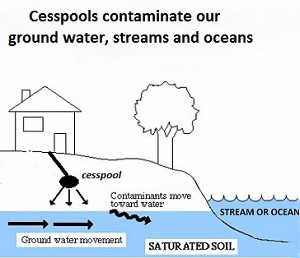
If Puna truly wanted to be the BEST steward, she and her group would remove the cesspools. Big Island has the most — 50,000. Mayor Kimo Alameda announced in summer 2025 that they would be unable to meet the legal requirement to remove all by 2050. They have 25 years. They do not have the will to care for the land.
Big Island is the home of Kamehameha, center of the Kanaka Sovereignty movement today, and flooded with angry, self-righteous Kanaka — but they refuse to clean up their shit — 50,000+ cesspools. These Kanaka aren’t “stewards” of these islands, but the greatest polluters in the islands. They aren’t leaders, but slackers who prefer fancy TRD trucks, big screen TVs, BudLight beer, and love blaming the White “haole” man for all their shortcomings. Clean up your shit before pointing fingers at others.
Now, Puna is seeking to purchase Molokai Ranch after the company put the land up for sale in 2017 at an asking price of $260 million. For $260 million, Puna’s group could remove all the cesspools. Clean up the shit! Show leadership and that you truly care about this ‘aina.
Puna also said red dirt sediment from West Molokai’s eroded slopes runs into the ocean after a heavy rain, turning the water red with pollution that can kill coral reefs and clog fishponds. The average mean temperature on Molokai is 72.5 F. Annual mean precipitation is 20 inches in West Molokai and 35 inches in the East Molokai. The rainfall is highest on the west and windward slope of the East Molokai, decreasing rapidly toward the leeward coast.
Comparatively, the high desert state of New Mexico receives average annual rainfall about 13 inches, though precipitation tends to increase with elevation. About 40 inches of rain fall in the higher mountains, whereas lower areas may get no more than 8 to 10 inches. Molokai is an arid, semi-desert climate in the middle of the tropical Pacific.
Due to lack of consistent rainfall, vegetation is sparse, and when rains come, red dirt sediments flow into streams and the ocean. That’s nature’s way on Molokai. Reefs and fishponds are human concerns. Puna wants to “re-engineer” Molokai, not in the best interests of nature, but for her human tribe.
“If our reef dies, we lose that as a source of food,” Puna said. She’s also concerned about how the land’s neglect is affecting deer populations, as they are leaving the west side in search of food elsewhere and “damaging the entire island’s ecosystem.” Deer are not native to Molokai; neither are humans.
Bullshit #6: Puna says the community is taking an offensive approach, coming together peacefully with the collective goal to buy back the land to take care of, protect and steward. She adds, “So we knew that in addition to having this deep, deep-seated desire to make this awesome impact, we also had a lot to learn.” Nature however knows best how to care for the lands of Molokai.
Bullshit #7: For Kanaka, they claim their connection to land is profound. Land is ‘aina, or that which feeds. It’s an unbreakable relationship that when physically severed is felt painfully deep. “Our Hawaiian people are so inherently tied to the place they were born and this place,” said Zhantell Lindo. Without it, there’s “a disconnect,” she continued. “It’s like being an orphan from each other.”
Anyone watch the series Yellowstone with Kevin Costner? Those people claimed their “connection to land is profound.” Same in Idaho, Wyoming, the heartland of America. Anywhere people are farming in rural areas they claim such a connection. How about a suburban homeowner with their small garden, plot of green grass? They claim a connection to land that is profound. It’s their livelihood, source of home for their family. And anyone losing this connection when physically severed suffers deep felt pain.
This group of Kanaka are self-righteous and claim superiority over others. The phrase a “Home is a Man’s Castle” has been expressed for hundreds of years
Bullshit #8: “Our Hawaiian people are so inherently tied to the place they were born and this place,” Lindo said. Without it, there’s “a disconnect,” Lindo continued. “It’s like being an orphan from each other.” These volcanic islands pushed up from the bottom of the ocean floor. No humans, plants or animals are indigenous. All came from somewhere else.
Thus, had Lindo’s ancestors truly been a people “tied to the place they were born,” they never would have ventured into the vast Pacific ocean striking out to find someplace new. The Pilgrims, for example, who landed at Plymouth Rock in 1620, likely didn’t want to leave the place they were born. Lack of opportunity, religious and political oppression, forced them to seek new lands.
The original indigenous people that landed in the Hawaiian islands likely suffered similar struggles. Some may truly have had an adventuresome spirit: to boldly go where no Polynesians had gone before. Others simply sought freedom and opportunity.
Bullshit #9: The group’s goal now is to return the land to its people. Actually this small group wants it — The People will not receive this land. With the purchase, the group plans to return the land to aina momona (an abundant land) by restoring the island’s health. However, they add, “He alii ka aina, he kauwa ke kanaka,” which means “The land is the chief; man is its servant.” Molokai Heritage Trust is not seeking to SERVE the land, but own and control this land.
The group claims they follow the kuleana (responsibility) that Hawaiians have to take care of the land, not in the Western sense as a piece of property, but as something that is revered and sacred. If something is sacred and revered, leave it alone. Nature knows best. Humans claim they know more than nature — or god.
Molokai Heritage Trust directors plan to live on this land or do business on this land; the group claims they are the BEST stewards of the land. Who decides? And for this reason, Kanaka fought over these lands for 100s of years, as each group claimed they were the BEST stewards.
Molokai Heritage Trust also talks about the reciprocal nature of this relationship, as the land will take care of the people as long as the people take care of the land. There’s the SELFISH part: the land will take care of the people. Build some affordable houses, maybe a convenience store to sell gas and beer on the corner … Kanaka are no different than people anywhere else in the world.
Russian President Vlad Putin believes his four captured regions of Ukrainian territory will take care of his people. Israel PM Netanyahu believes the captured region of Gaza will take care of his people. And all leaders claim their people will care for the land.
Bullshit #10: This younger generation of political activists must answer the most important question: How are they going to raise $260 million? “We looked into carbon credits like blue carbon, to partnerships with the state, to partnerships with philanthropy,” Kalipi said. DONATIONS !!! They do not know how to make money. They seek to tax or siphon money from others — like continuing to live off their parents.
The economic reality is the world doesn’t need Molokai Ranch to be developed or protected. The Molokai community said leave the country country in 2008. The billionaire investment firm Guoco Group complied. They leave the land country, and the high-end lodge, glamping resort, restaurant and golf course to nature.
Molokai Heritage Trust sees disrepair. The Maunaloa community blocked repair, and prevented care of critical infrastructure, like the water system. Housing now is falling apart, and nobody cares to do the repairs. If the local community doesn’t have the will to care for and repair housing, they don’t have the knowledge or skills to manage the land. Take initiative to repair what they have.
Maui County also passed a resolution this year in support of the Molokai Heritage Trust’s “efforts to restore community ownership of ancestral lands on Molokai,” which could potentially bring millions of dollars to the cause. Maui County residents will be taxed. Not sure they will be happy, as costs and taxes are extremely high at this time.
Nature is never out of balance. Humans destroy nature’s harmony with their wants and desires — usually a form of greed or power or both. The group claims Princess Bernice Pauahi Pākī Bishop stated a prophecy that the common people will rise like a wave.
Molokai Heritage Trust needs to learn the truth about capitalism. It’s not a perfect system, but it’s still the best system to create wealth. People have to work to generate a wave. Provide a service or good that is useful to others, and use nature’s resources to supply the raw materials for this production — then the land takes care of us. Until they figure out this important life lesson, this group of Kanaka are simply talking shit.
Ua Mau ke Ea o ka ʻĀina i ka Pono
The life of the land is perpetuated in righteousness
If you want to learn more about being PONO (righteous) in Hawai’i, see Becoming Tribal.
Remember you heard it here first. Please leave your comments below and be sure to FOLLOW ClearHeath Life Strategies. We provide News of the News You Wish You Knew.
Ko’olau of Kaua’i. I am the Defiant One
“I Believe We Can”
 ClearHealthLife Strategies